
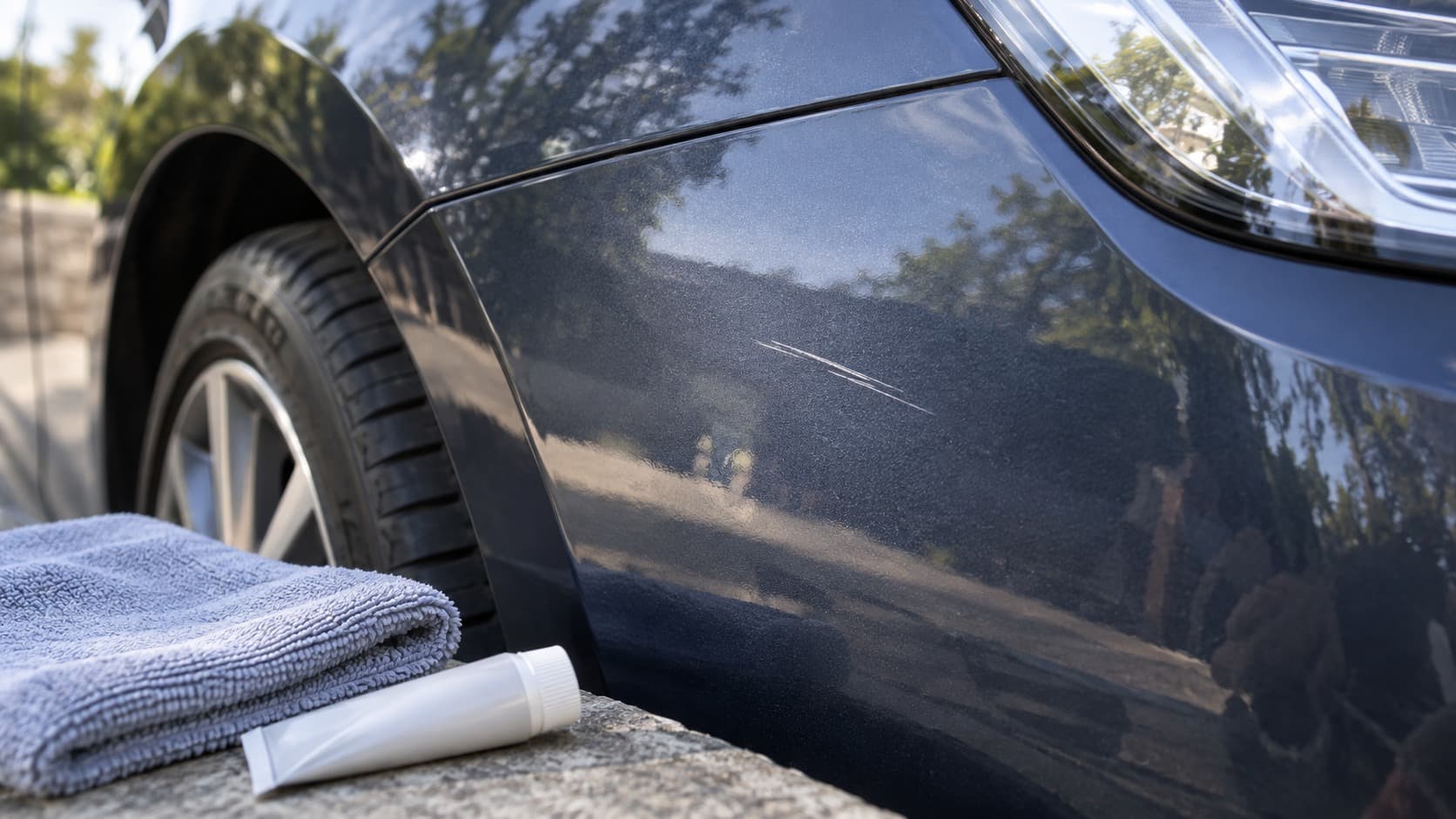
Auto body shops charge meaningfully more for a scratch repair than a DIY kit costs, which is exactly the price gap that products like Scratch Repair Car's lineup are built to close — but a DIY scratch fix only works well within specific limits. Understanding those limits is the most useful thing to know before ordering.
Scratch depth determines whether a DIY kit can actually help
Automotive scratches fall into roughly three depth categories: clear-coat-only scratches (haven't reached the base color coat), base-coat scratches (color is visible but not down to bare metal), and deep scratches reaching primer or metal. DIY compound-and-polish kits, including this category of product, are generally effective on clear-coat-only scratches and have real limits on deeper ones — running a fingernail test (if it doesn't catch, it's likely clear-coat only) before ordering is the most useful first step to set realistic expectations.
Compound abrasiveness and application method matter more than marketing claims
The actual mechanism behind most scratch-repair products is a mildly abrasive polishing compound that gradually smooths the clear coat around the scratch until it's no longer visually distinct, applied by hand or with a buffing pad. Checking the specific compound grit level and recommended application method (hand-applied vs. pad-buffed) on the listing gives a more realistic sense of results than "removes any scratch" marketing language.
Color-matching claims need to be checked against your specific paint code
For products that include a color-matching or paint-fill component (rather than pure compound-and-polish), the accuracy depends entirely on correctly identifying your vehicle's specific paint code, which is usually found on a manufacturer's sticker inside the door jamb or under the hood. Any color-matching claim is only as good as the paint code you provide, so verifying that code carefully before ordering is a meaningfully important step.
Realistic expectations beat "like new" marketing
DIY scratch repair generally reduces visibility rather than making a scratch invisible under all lighting and viewing angles, particularly for anything beyond clear-coat-only damage. Setting that expectation upfront — significant improvement rather than an invisible factory-perfect finish — is the honest way to evaluate whether this category of product is worth trying for a specific scratch.
Who this actually fits
- Vehicle owners with clear-coat-only scratches (confirmed with a simple fingernail test) wanting a lower-cost alternative to a body shop
- Buyers willing to correctly identify their specific paint code before ordering any color-matching product
- Anyone with realistic expectations of significant visual improvement rather than an invisible, factory-perfect fix
- Not a fit for deep scratches reaching primer or bare metal — those generally need professional repair
Conclusion
For a DIY scratch-repair brand like Scratch Repair Car, the outcome depends far more on your scratch's actual depth and your paint-code accuracy than on the product itself. Running the fingernail depth test and confirming your paint code before ordering are the two concrete steps that most determine whether this category of product will work for your specific scratch.
If you're ready to buy, Scratch repair car is worth checking — they currently have 10% off entire order with code QUYNH5839 live right now.
If you're ready to buy, Scratch repair car is worth checking — they currently have 10% off entire order with code QUYNH5839 live right now.
Get 10% OFF Entire Order at Scratch repair car
Use code QUYNH5839 at checkout
This article contains an affiliate link. If you buy through it, 5listed may earn a commission at no extra cost to you — see our review policy.
Keep reading
Related Articles

Published: August 11, 2026
Caring for Your EV Charging Accessories So They Actually Last for Years
A charging cable gets handled, coiled, and dragged across the garage floor daily. Here's how to keep it in good shape for the long haul.
Published: August 11, 2026
Wellness Product Terms Explained Plainly (No Jargon)
A plain-language glossary of the terms that show up most often on wellness product labels, so you know what you're actually buying.
Herbal Tea Terms Explained: What's Actually on the Label
Published: August 11, 2026
Herbal Tea Terms Explained: What's Actually on the Label
Herbal tea packaging uses a specific vocabulary of its own. Here's what the common terms actually mean, in plain language.