
Questions to Ask Yourself Before Buying an EV Charging Solution
EV charging solutions represent a real investment, and a handful of honest questions worked through before buying prevents the most common regrets — an oversized or undersized purchase, unexpected installation costs, or a solution that doesn't match how you'll actually use it day to day.
What does my actual daily driving pattern look like?
How many miles you typically drive in a day determines how much charging capacity you genuinely need — someone driving a short daily commute has very different charging needs than someone regularly covering long distances. Overestimating this need leads to paying for charging speed that never gets used; underestimating it leads to a charger that can't keep up with actual usage. Being honest about typical, not aspirational, driving patterns matters here.
Do I have a dedicated, consistent parking spot?
A fixed home wallbox only makes sense if you have a consistent parking location to install it at — anyone without dedicated, reliable parking access (street parking, shared parking without assigned spots) should seriously consider whether a portable charging solution is actually the more practical fit, regardless of a wallbox's charging speed advantages.
What will installation actually cost, beyond the unit itself?
Getting an actual electrician quote before committing to a specific wallbox avoids the common surprise of discovering a home's electrical panel needs upgrading to support the new load — a cost that can meaningfully exceed the charger unit's own price and isn't always obvious from the unit's listed price alone. This question is worth answering before falling in love with a specific model based on its features.
How might my situation change in the next few years?
A planned move, adding a second EV to the household, or a change in daily driving patterns (a new job with a longer commute, for instance) can all affect whether a fixed home installation or a portable solution makes more sense long-term. A portable charger travels with you through a move without needing to redo any installation; a wallbox is tied to wherever it's mounted — worth considering honestly rather than assuming current circumstances are permanent.
Do I actually need or want smart features?
App-based scheduling, usage tracking, and solar integration are genuinely useful for some buyers and unnecessary complexity for others — being honest about whether you'll actually use these features regularly, versus paying extra for capability that goes unused, matters for getting real value from the purchase rather than paying for a feature set that sounds appealing but doesn't match actual habits.
A pre-purchase question checklist
- What's my actual (not aspirational) typical daily driving distance?
- Do I have consistent, dedicated parking access for a fixed installation?
- Have I gotten a real electrician quote covering any needed panel upgrades, not just the unit price?
- How might my parking situation, household EV count, or driving pattern change in the next few years?
- Will I genuinely use smart/app-based features regularly, or am I paying for capability I won't use?
What questions should I ask an installer specifically?
Beyond a general cost quote, worthwhile installer-specific questions include: what happens if the panel needs an upgrade beyond the initial estimate, what the expected installation timeline looks like, whether any permits or inspections are required in your area and who handles that process, and what warranty applies to the installation work itself, separate from the charger unit's own manufacturer warranty. Getting clear answers to these before committing avoids assuming a single quoted number covers every possible scenario that might arise during actual installation.
How does my utility rate structure affect the buy decision?
Checking whether your electricity provider offers time-of-use rates or specific EV charging rate plans can meaningfully affect both the economics of home charging and which smart features (like scheduled off-peak charging) actually deliver real value versus being an unused feature. This is worth researching specifically for your utility and area before finalizing a purchase decision, since the potential savings from rate-aware charging can be a genuinely significant factor in the overall value calculation, not just a minor bonus feature.
Have I checked for any available incentives or rebates?
Many regions offer rebates, tax incentives, or utility-sponsored programs specifically for home EV charging installation, and checking current availability of these programs before finalizing a purchase can meaningfully offset the total cost calculated from the other questions in this checklist. These programs change over time and vary significantly by location, so checking current, local information rather than relying on general or outdated knowledge about incentive availability is worth the extra research step.
Have I considered how charger placement affects daily convenience?
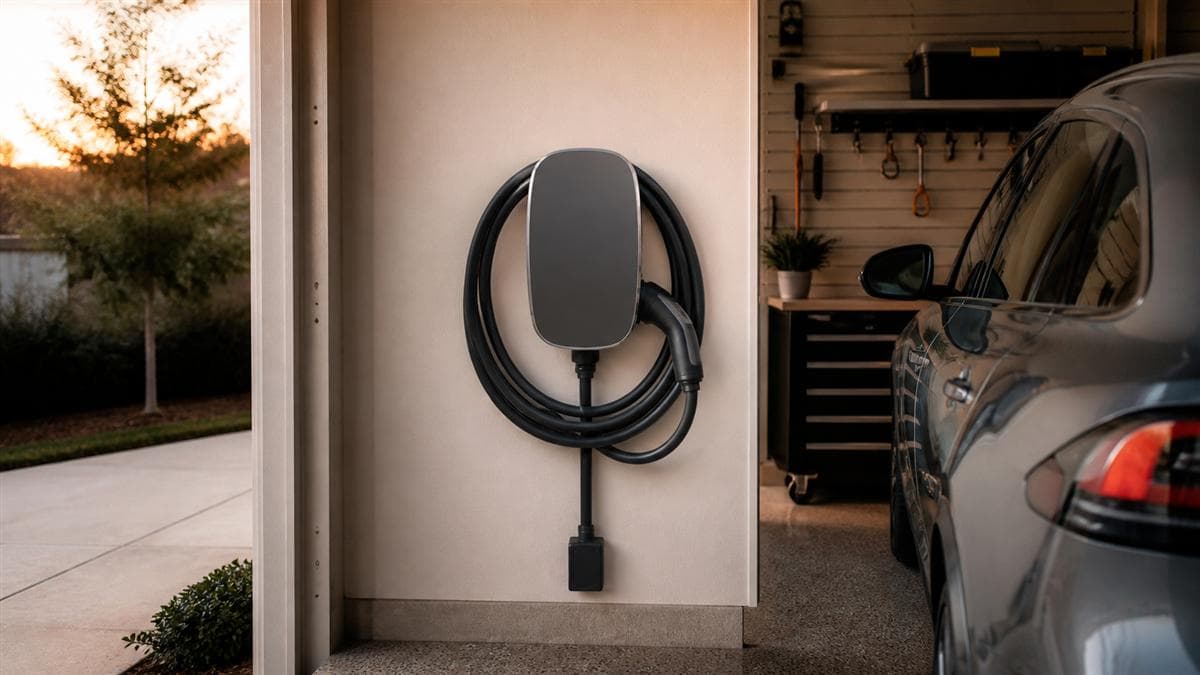
Beyond technical specs, thinking through exactly where a home charger will be mounted relative to where the vehicle typically parks — cable length, walking distance, weather exposure during connection — affects daily convenience in ways that are easy to overlook when focused mainly on charging speed and cost.
One last question: how will I charge if the primary charger is ever unavailable?
Having at least a basic backup charging plan — a nearby public charger, a portable option — for the rare occasion a primary home charger is unavailable (maintenance, a power outage) rounds out a genuinely complete pre-purchase decision process.
If you're ready to buy, Juice Technology AG is worth checking — they currently have €50 off with code DUY live right now.
If you're ready to buy, Juice Technology AG is worth checking — they currently have €50 off with code DUY live right now.
If you're ready to buy, Juice Technology AG is worth checking — they currently have €50 off with code DUY live right now.
If you're ready to buy, Juice Technology AG is worth checking — they currently have €50 off with code DUY live right now.
If you're ready to buy, Juice Technology AG is worth checking — they currently have €50 off with code DUY live right now.
If you're ready to buy, Juice Technology AG is worth checking — they currently have €50 off with code DUY live right now.
If you're ready to buy, Juice Technology AG is worth checking — they currently have €50 off with code DUY live right now.
If you're ready to buy, Juice Technology AG is worth checking — they currently have €50 off with code DUY live right now.
If you're ready to buy, Juice Technology AG is worth checking — they currently have €50 off with code DUY live right now.
If you're ready to buy, Juice Technology AG is worth checking — they currently have €50 off with code DUY live right now.
If you're ready to buy, Juice Technology AG is worth checking — they currently have €50 off with code DUY live right now.
If you're ready to buy, Juice Technology AG is worth checking — they currently have €50 off with code DUY live right now.
If you're ready to buy, Juice Technology AG is worth checking — they currently have €50 off with code DUY live right now.
If you're ready to buy, Juice Technology AG is worth checking — they currently have €50 off with code DUY live right now.
If you're ready to buy, Juice Technology AG is worth checking — they currently have €50 off with code DUY live right now.
If you're ready to buy, Juice Technology AG is worth checking — they currently have €50 off with code DUY live right now.
Get €50 OFF at Juice Technology AG
Use code DUY at checkout
Shop Juice Technology AG Now →
This article contains an affiliate link. If you buy through it, 5listed may earn a commission at no extra cost to you — see our review policy.
Conclusion
Working through these questions honestly before buying — actual driving patterns, parking situation, real installation cost, future changes, and genuine feature needs — prevents the most common EV charging purchase regrets. A charging solution matched to real, current circumstances (not an idealized or aspirational version of them) tends to deliver much better long-term satisfaction than one chosen purely on specs or features.
Keep reading
Related Articles

Published: August 11, 2026
Niimbot Portable Label Printer Review: Is It Actually Worth Using for Everyday Organizing?
A practical look at Niimbot's pocket-sized Bluetooth label printers — what they're genuinely good at, where they fall short, and who should skip them.

Published: August 11, 2026
Xbows Mechanical Keyboards Long-Term: What Actually Holds Up After Regular Daily Use
Ergonomic mechanical keyboards get a lot of hype at unboxing. Here's what tends to matter — and what tends to wear — once one becomes your daily driver.
Published: August 11, 2026
Juice Technology AG EV Chargers Compared: Which Model Actually Fits Your Setup
Juice Technology AG makes several home and portable EV charging options. Here's how the general categories differ so you pick the right one, not the flashiest one.