
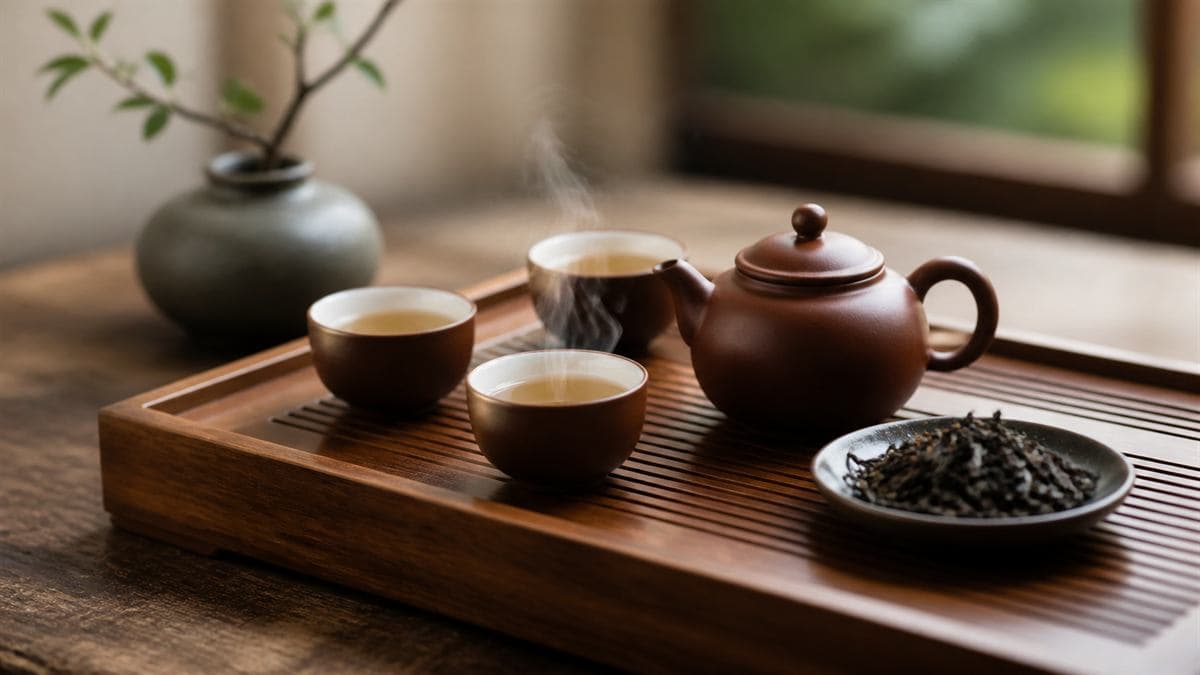
Traditional tea preparation, whether you're drawn to Chinese gongfu tea, Japanese tea ceremony-inspired practices, or another regional tradition, has a learning curve that's easy to overcomplicate from the outside. This checklist covers the practical basics worth getting right for a first at-home session, without needing years of formal training to get real enjoyment out of it.
Equipment basics to have ready
- A small teapot or gaiwan appropriate to the tradition you're exploring — size matters more than most beginners expect, since traditional preparation often uses smaller vessels than a typical Western teapot
- A few small cups sized for short, frequent pours rather than one large cup filled once
- A pitcher or "fairness cup" if you're preparing gongfu-style, used to ensure each small cup gets an evenly steeped pour
- A simple strainer if your teapot or gaiwan doesn't include one built in
- A kettle that lets you control water temperature reasonably well — different tea types call for different temperatures
Water temperature and quality
Water that's too hot for a given tea type can produce a bitter, harsh result, while water that's too cool can under-extract and leave flavor underdeveloped. Green and white teas generally call for cooler water than black or oolong teas — checking a specific tea's recommended temperature before your first session avoids a disappointing first impression of what might otherwise be a genuinely good tea. Water quality matters too; heavily chlorinated or mineral-heavy tap water can noticeably affect flavor, and filtered water is worth using if your tap water has a strong taste of its own.
Timing and multiple infusions
A key feature of traditional preparation methods, especially gongfu-style, is multiple short infusions of the same leaves rather than one long steep — often starting with very brief steeps (sometimes just seconds) and gradually extending steep time with each subsequent infusion. This is genuinely different from typical Western tea preparation and takes some getting used to, but it's part of what lets good loose-leaf tea reveal different flavor notes across several rounds rather than delivering everything in one steep.
Mindset and pacing
Traditional tea preparation, in most of its forms, is as much about slowing down and paying attention as it is about the tea itself — rushing through it defeats a lot of the actual point. Setting aside genuine, uninterrupted time for a first session, rather than trying to fit it into a rushed morning routine, makes a much better introduction to the practice than trying to squeeze it into five spare minutes.
Starting simple before going deeper
It's tempting to research every regional variation and formal etiquette detail before starting, but a simpler approach — picking one basic method, one good-quality tea, and just practicing — tends to build real understanding faster than trying to absorb every tradition's full formal etiquette at once. Formal ceremony details and deeper regional distinctions are worth exploring once the basic mechanics (water temperature, steep timing, multiple infusions) feel comfortable.
A simple first-session checklist
- Pick one tea type and confirm its recommended water temperature and steep time before starting
- Warm your teapot/gaiwan and cups with hot water first, then discard that water — a common traditional step that helps maintain steeping temperature
- Do a very brief first steep (a quick rinse) with some traditional methods, discarding it, before your first real infusion — check whether your specific tea type calls for this
- Steep in short intervals, tasting between rounds rather than committing to one long steep
- Set aside real, unhurried time rather than treating it as a quick beverage prep
Where to actually learn more once the basics feel comfortable
Once the fundamentals — water temperature, short multiple infusions, basic equipment — feel comfortable, local tea shops, community classes, or online communities focused on a specific tradition often offer far deeper, more accurate guidance than generic articles can provide, especially for the more nuanced formal etiquette details of a specific regional tradition. Seeking out a genuine source connected to the specific tradition you're interested in, rather than relying solely on generalized guides, leads to a more authentic and accurate deeper understanding as interest grows.
A note on quality versus price when choosing your first teas
It's not necessary to spend heavily to get a genuinely good introduction to traditional tea preparation — a reasonably priced, good-quality loose-leaf tea from a reputable source will showcase the multiple-infusion technique and basic preparation method just as effectively as an expensive specialty tea, and arguably better for a beginner, since it removes financial pressure from what should be a low-stakes learning process. Save the pricier specialty teas for once you've developed enough of a palate, through practice with more affordable options, to genuinely appreciate what makes them special.
A note on the social dimension of traditional tea practice
Many traditional tea practices are historically rooted in a social or shared experience, not just a solitary ritual — sharing a session with others, even informally, can add a dimension to the practice that solo preparation doesn't fully capture. For anyone interested in exploring this more socially rooted aspect of the tradition, seeking out a local group or even just introducing a friend to a shared session adds a layer of the experience worth considering alongside the individual technical skills already covered.
If you're ready to buy, Loose Leaf Tea Market is worth checking — they currently have 10% off with code TEAHIEN10 live right now.
If you're ready to buy, Loose Leaf Tea Market is worth checking — they currently have 10% off with code TEAHIEN10 live right now.
If you're ready to buy, Loose Leaf Tea Market is worth checking — they currently have 10% off with code TEAHIEN10 live right now.
If you're ready to buy, Loose Leaf Tea Market is worth checking — they currently have 10% off with code TEAHIEN10 live right now.
If you're ready to buy, Loose Leaf Tea Market is worth checking — they currently have 10% off with code TEAHIEN10 live right now.
If you're ready to buy, Loose Leaf Tea Market is worth checking — they currently have 10% off with code TEAHIEN10 live right now.
If you're ready to buy, Loose Leaf Tea Market is worth checking — they currently have 10% off with code TEAHIEN10 live right now.
If you're ready to buy, Loose Leaf Tea Market is worth checking — they currently have 10% off with code TEAHIEN10 live right now.
If you're ready to buy, Loose Leaf Tea Market is worth checking — they currently have 10% off with code TEAHIEN10 live right now.
If you're ready to buy, Loose Leaf Tea Market is worth checking — they currently have 10% off with code TEAHIEN10 live right now.
If you're ready to buy, Loose Leaf Tea Market is worth checking — they currently have 10% off with code TEAHIEN10 live right now.
If you're ready to buy, Loose Leaf Tea Market is worth checking — they currently have 10% off with code TEAHIEN10 live right now.
If you're ready to buy, Loose Leaf Tea Market is worth checking — they currently have 10% off with code TEAHIEN10 live right now.
If you're ready to buy, Loose Leaf Tea Market is worth checking — they currently have 10% off with code TEAHIEN10 live right now.
If you're ready to buy, Loose Leaf Tea Market is worth checking — they currently have 10% off with code TEAHIEN10 live right now.
If you're ready to buy, Loose Leaf Tea Market is worth checking — they currently have 10% off with code TEAHIEN10 live right now.
Get 10% OFF at Loose Leaf Tea Market
Use code TEAHIEN10 at checkout
Shop Loose Leaf Tea Market Now →
This article contains an affiliate link. If you buy through it, 5listed may earn a commission at no extra cost to you — see our review policy.
Conclusion
Traditional tea preparation rewards patience more than expertise — starting with basic equipment, correct water temperature, and short multiple infusions gets you genuine results without needing to master every formal detail first. Treat the first few sessions as practice, not performance, and the deeper appreciation tends to build naturally from there.
Keep reading
Related Articles
Published: August 11, 2026
Niimbot Portable Label Printer Review: Is It Actually Worth Using for Everyday Organizing?
A practical look at Niimbot's pocket-sized Bluetooth label printers — what they're genuinely good at, where they fall short, and who should skip them.

Published: August 11, 2026
Xbows Mechanical Keyboards Long-Term: What Actually Holds Up After Regular Daily Use
Ergonomic mechanical keyboards get a lot of hype at unboxing. Here's what tends to matter — and what tends to wear — once one becomes your daily driver.

Published: August 11, 2026
Juice Technology AG EV Chargers Compared: Which Model Actually Fits Your Setup
Juice Technology AG makes several home and portable EV charging options. Here's how the general categories differ so you pick the right one, not the flashiest one.