
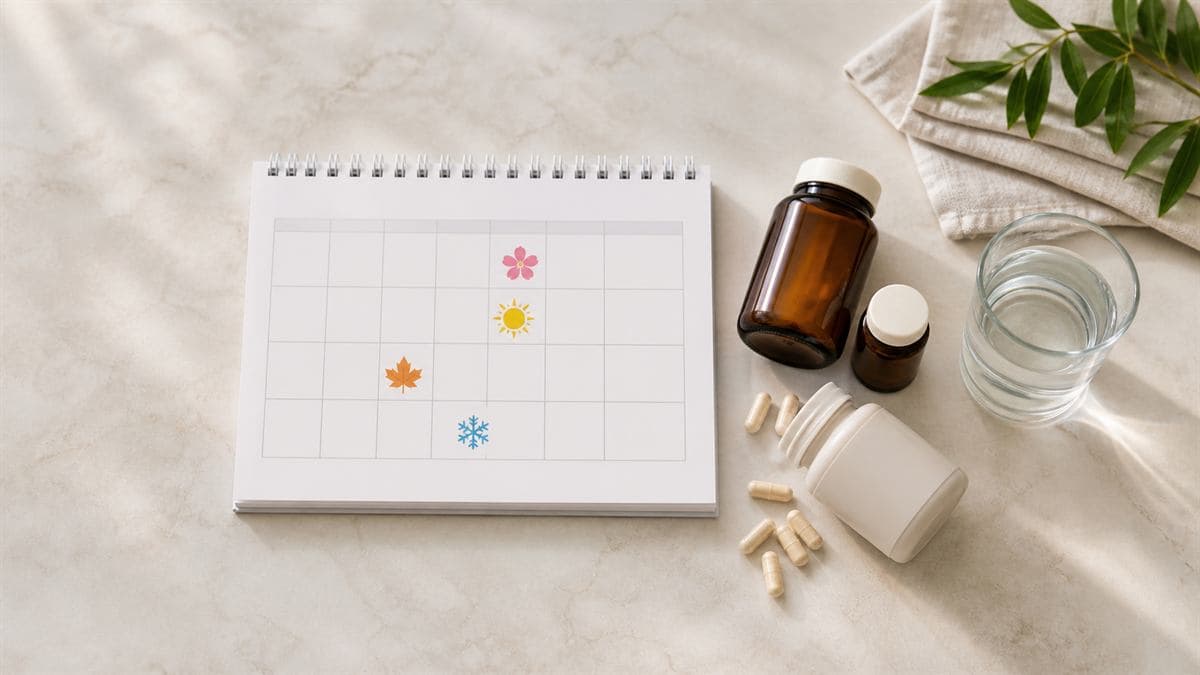
Running out of a daily supplement or wellness essential and buying it in a rush, at whatever price is available, is one of the easiest ways to overspend in this category over a year. A simple restock calendar — planning ahead by season instead of reacting when the bottle's empty — smooths that out considerably, and it only takes a few minutes of thinking to set up once.
Winter (Dec–Feb): immune and indoor-season essentials
This is the natural window to restock anything related to immune support, indoor air/humidity products, and general cold-season wellness items. It also overlaps with the New Year wellness shopping wave, which tends to bring genuinely competitive pricing across the category — a good time to stock up a bit further ahead than usual, especially for products you know you'll use through the whole winter stretch.
Spring (Mar–May): reset and refresh essentials
A natural point to reassess your routine broadly — check what you actually finished using over winter versus what sat unused, and restock accordingly rather than automatically repurchasing everything. Spring promotions tied to "reset" marketing themes can also be a reasonable time to try a new product at a lower entry cost, if there's something you've been curious about but weren't ready to pay full price to test.
Summer (Jun–Aug): hydration and outdoor-season items
Shift restocking focus toward anything tied to more active, outdoor time — hydration-support products, sun-related skin and wellness items, and travel-sized versions of your daily essentials if summer means more time away from home. This is also a reasonable season to scale back on anything that was specifically winter-focused, rather than continuing to restock it out of habit.
Fall (Sep–Nov): before the biggest sale window of the year
Rather than restocking everything in fall, this is the season to take inventory and hold off on non-urgent purchases until the major Black Friday/Cyber Monday shopping window in late November, when wellness and supplement brands often run their best bundle and subscription pricing of the year. Building a running list through fall of what you'll need soon makes that November shopping window much more efficient — you already know exactly what to buy rather than scrambling once the sales start.
Building your own version of this calendar
The exact categories above are a starting point, not a fixed rule — the real value is in mapping your own specific routine against a seasonal rhythm rather than buying reactively. Start by listing what you actually use regularly, note roughly how long each one lasts you, and then plot rough restock dates against the seasonal windows above. Revisit the list every few months, since routines and needs shift over time.
A simple rule of thumb
- Daily-use essentials: restock when you're down to about a 3–4 week supply, timed to the nearest seasonal window above if possible
- Occasional-use items: hold purchases for the bigger sale windows (January, Black Friday) since running out isn't urgent
- Anything you're trying for the first time: spring or January promotions are usually the lowest-risk entry point
- Anything you've stopped using consistently: don't restock automatically just because it's "on the list" — reassess whether it's still worth buying at all
Avoiding the subscription trap
Many wellness brands push subscription or auto-ship programs, often with a modest discount attached, and while this can genuinely help with consistent restocking for a true daily-use product, it's worth periodically checking that a subscription still matches actual consumption rather than letting it run indefinitely by default. It's a common pattern for a subscription to keep shipping a product long after actual usage has slowed or stopped, quietly accumulating unused stock and unnecessary spending. Setting a calendar reminder every few months to review active subscriptions against what's genuinely still being used keeps this seasonal shopping calendar approach from being undermined by a separate, less examined recurring purchase habit.
Tracking what you spend across a full year
Keeping even a rough running total of wellness spending across a full year — not to restrict spending necessarily, but simply to see the real total — often reveals patterns that aren't obvious purchase by purchase, like a specific category that's costing more than expected relative to how much it's actually valued, or a seasonal window that was missed for a purchase that ended up costing more at full price later. This kind of light tracking pairs naturally with the seasonal calendar approach, turning it from a one-time read into an evolving personal system refined each year based on real spending data.
Adjusting the calendar for a household with varying needs
A household with multiple people using different wellness essentials — different supplement needs, different skincare routines — benefits from either a shared master calendar covering everyone's restocking needs, or individual mini-calendars per person if needs vary enough that a single shared list becomes unwieldy. Either approach works, but explicitly deciding which structure fits your household, rather than letting restocking happen ad hoc without any system at all, is what actually makes this calendar approach deliver real value over time.
Adjusting for major life changes mid-year
A move, a new job with a different schedule, or a change in household composition can all shift which seasonal categories matter most, and revisiting the calendar after any significant life change — rather than assuming last year's version still applies — keeps the whole system genuinely useful rather than a stale template that no longer reflects current needs.
If you're ready to buy, Nutriessential is worth checking — they currently have 5% off live right now.
If you're ready to buy, Nutriessential is worth checking — they currently have 5% off live right now.
If you're ready to buy, Nutriessential is worth checking — they currently have 5% off live right now.
If you're ready to buy, Nutriessential is worth checking — they currently have 5% off live right now.
If you're ready to buy, Nutriessential is worth checking — they currently have 5% off live right now.
If you're ready to buy, Nutriessential is worth checking — they currently have 5% off live right now.
If you're ready to buy, Nutriessential is worth checking — they currently have 5% off live right now.
If you're ready to buy, Nutriessential is worth checking — they currently have 5% off live right now.
If you're ready to buy, Nutriessential is worth checking — they currently have 5% off live right now.
If you're ready to buy, Nutriessential is worth checking — they currently have 5% off live right now.
If you're ready to buy, Nutriessential is worth checking — they currently have 5% off live right now.
If you're ready to buy, Nutriessential is worth checking — they currently have 5% off live right now.
If you're ready to buy, Nutriessential is worth checking — they currently have 5% off live right now.
If you're ready to buy, Nutriessential is worth checking — they currently have 5% off live right now.
If you're ready to buy, Nutriessential is worth checking — they currently have 5% off live right now.
If you're ready to buy, Nutriessential is worth checking — they currently have 5% off live right now.
Get 5% OFF at Nutriessential
This article contains an affiliate link. If you buy through it, 5listed may earn a commission at no extra cost to you — see our review policy.
Conclusion
Wellness restocking doesn't need to be reactive. Mapping your actual essentials against this rough seasonal rhythm — immune-season items in winter, a routine reset in spring, hydration/travel needs in summer, and holding non-urgent buys for the big fall sale window — is a simple way to stay stocked without constantly buying at full price out of necessity.
Keep reading
Related Articles
Published: August 11, 2026
Niimbot Portable Label Printer Review: Is It Actually Worth Using for Everyday Organizing?
A practical look at Niimbot's pocket-sized Bluetooth label printers — what they're genuinely good at, where they fall short, and who should skip them.

Published: August 11, 2026
Xbows Mechanical Keyboards Long-Term: What Actually Holds Up After Regular Daily Use
Ergonomic mechanical keyboards get a lot of hype at unboxing. Here's what tends to matter — and what tends to wear — once one becomes your daily driver.
Published: August 11, 2026
Juice Technology AG EV Chargers Compared: Which Model Actually Fits Your Setup
Juice Technology AG makes several home and portable EV charging options. Here's how the general categories differ so you pick the right one, not the flashiest one.