
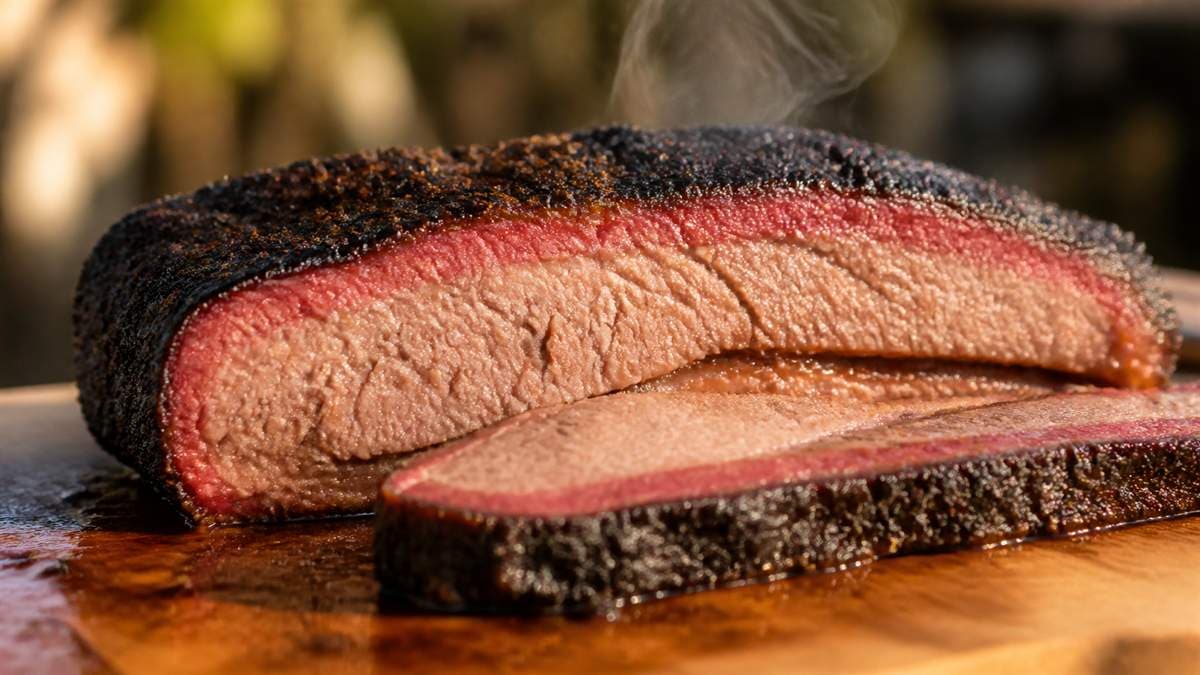
The pink ring just under the bark on a great piece of smoked meat is one of the most visually satisfying signs of a good cook, and it's also one of the most misunderstood. A smoke ring isn't caused by flavor or seasoning — it's a chemical reaction between combustion gases and the meat's surface, and understanding that distinction is the key to reliably getting one instead of hoping for one.
What's actually happening, briefly
When wood or charcoal burns, it produces nitrogen dioxide, which combines with moisture on the meat's surface to form nitric acid. That reacts with myoglobin in the meat, keeping it pink instead of letting it turn the usual grayish-brown color heat normally causes. This reaction only happens while the meat's surface is cool and moist enough to absorb those gases — meaning the ring forms almost entirely in the first hour or so of a smoke, before the surface dries out and heats past the point where the reaction can continue.
Start cold, not room temperature
Meat straight from the fridge holds moisture on its surface longer and takes longer to come up to the temperature range where the ring-forming reaction stops. Skipping the "let it come to room temperature first" step that a lot of general cooking advice recommends actually helps here — a cold start gives combustion gases more time to interact with the surface before it's too warm to react.
Keep the surface moist during that early window
A light coat of moisture — a thin mustard binder, a simple vinegar-based spritz, or just letting a wet rub sit — helps the surface stay receptive to those combustion gases for longer. This is also part of why a wetter cooking environment (a water pan in the smoker, higher-humidity weather) tends to produce more pronounced rings than a bone-dry setup.
Wood choice matters more than most people think
More combustion, more nitrogen dioxide. This is part of why charcoal and wood-fired smokers tend to produce more visible rings than gas or electric smokers, which burn cleaner and produce far less of the compound the reaction depends on. If a pronounced ring matters to you, a real wood or charcoal fire — even paired with an electric or gas unit as the primary heat source — makes a bigger difference than fussing over rub ingredients.
A few myths worth clearing up
- A bigger smoke ring doesn't mean better flavor — it's a visual effect from a chemical reaction, not a flavor indicator on its own
- Pink curing salt (often used in sausage-making) can mimic or exaggerate a smoke ring look even without real smoke exposure — that's a different mechanism, not a shortcut worth relying on for authentic barbecue
- A missing ring doesn't mean a bad cook — gas and electric smokers regularly produce excellent, tender results without a pronounced ring, since the ring is cosmetic, not a doneness or quality signal
- You can't "extend" the ring later in the cook by adding more smoke once the surface has dried and warmed past the reactive window — the timing matters more than total smoke exposure
Troubleshooting a weak or missing ring
If rings have been inconsistent, check three things first: whether the meat started cold, whether the surface had enough moisture in that first hour, and whether the fire is producing real combustion (wood or charcoal) rather than relying entirely on an electric heating element with wood chips as an afterthought. Getting all three right consistently is what separates an occasional ring from a reliable one on every cook.
Does injecting or using curing salt actually help?
Some backyard cooks experiment with meat injections or a small amount of curing salt specifically to enhance ring appearance, and while curing salt can produce a pink coloring effect that resembles a smoke ring, it's a genuinely different chemical mechanism than the real thing, and relying on it changes what's actually happening in the meat rather than simply enhancing a natural smoke reaction. For cooks focused on achieving an authentic smoke ring through genuine combustion chemistry, this is generally considered a separate technique rather than a legitimate shortcut, and it's worth understanding the distinction before deciding whether it fits your own approach to a cook.
Photographing and judging a smoke ring accurately
Lighting has a real effect on how a smoke ring appears in photos — natural daylight tends to show the pink coloration most accurately, while some artificial lighting can either wash it out or exaggerate it. If a smoke ring's appearance matters to you for sharing results, cutting and photographing a slice in consistent, natural light gives a much more accurate sense of the actual result than photos taken under warm indoor lighting, which can make an unremarkable ring look more dramatic than it really is, or vice versa.
How different meats respond differently to the same technique
The techniques above apply broadly, but different meats respond somewhat differently — pork tends to show a particularly pronounced ring given its typical fat content and surface characteristics, while leaner cuts or poultry can show a less dramatic ring even with identical technique, simply due to differences in moisture retention and surface composition. Adjusting expectations by meat type, rather than expecting an identical ring appearance across every cut, avoids the false impression that a technique "isn't working" when the real explanation is simply the meat itself behaving differently.
If you're ready to buy, Rosies chips is worth checking — they currently have 15% off with code WELCOME15 live right now.
If you're ready to buy, Rosies chips is worth checking — they currently have 15% off with code WELCOME15 live right now.
If you're ready to buy, Rosies chips is worth checking — they currently have 15% off with code WELCOME15 live right now.
If you're ready to buy, Rosies chips is worth checking — they currently have 15% off with code WELCOME15 live right now.
If you're ready to buy, Rosies chips is worth checking — they currently have 15% off with code WELCOME15 live right now.
If you're ready to buy, Rosies chips is worth checking — they currently have 15% off with code WELCOME15 live right now.
If you're ready to buy, Rosies chips is worth checking — they currently have 15% off with code WELCOME15 live right now.
If you're ready to buy, Rosies chips is worth checking — they currently have 15% off with code WELCOME15 live right now.
If you're ready to buy, Rosies chips is worth checking — they currently have 15% off with code WELCOME15 live right now.
If you're ready to buy, Rosies chips is worth checking — they currently have 15% off with code WELCOME15 live right now.
If you're ready to buy, Rosies chips is worth checking — they currently have 15% off with code WELCOME15 live right now.
If you're ready to buy, Rosies chips is worth checking — they currently have 15% off with code WELCOME15 live right now.
If you're ready to buy, Rosies chips is worth checking — they currently have 15% off with code WELCOME15 live right now.
If you're ready to buy, Rosies chips is worth checking — they currently have 15% off with code WELCOME15 live right now.
If you're ready to buy, Rosies chips is worth checking — they currently have 15% off with code WELCOME15 live right now.
If you're ready to buy, Rosies chips is worth checking — they currently have 15% off with code WELCOME15 live right now.
Get 15% OFF at Rosies chips
Use code WELCOME15 at checkout
This article contains an affiliate link. If you buy through it, 5listed may earn a commission at no extra cost to you — see our review policy.
Conclusion
A smoke ring is chemistry, not seasoning — nitrogen dioxide from real combustion reacting with a moist, cold meat surface in the first hour of a cook. Start cold, keep the surface moist early on, and lean on real wood or charcoal rather than a cleaner-burning gas or electric setup if a visible ring matters to you. And if one doesn't show up on a given cook, don't read too much into it — some of the best barbecue ever made had no ring to show for it.
Keep reading
Related Articles
Published: August 11, 2026
Niimbot Portable Label Printer Review: Is It Actually Worth Using for Everyday Organizing?
A practical look at Niimbot's pocket-sized Bluetooth label printers — what they're genuinely good at, where they fall short, and who should skip them.

Published: August 11, 2026
Xbows Mechanical Keyboards Long-Term: What Actually Holds Up After Regular Daily Use
Ergonomic mechanical keyboards get a lot of hype at unboxing. Here's what tends to matter — and what tends to wear — once one becomes your daily driver.
Published: August 11, 2026
Juice Technology AG EV Chargers Compared: Which Model Actually Fits Your Setup
Juice Technology AG makes several home and portable EV charging options. Here's how the general categories differ so you pick the right one, not the flashiest one.