
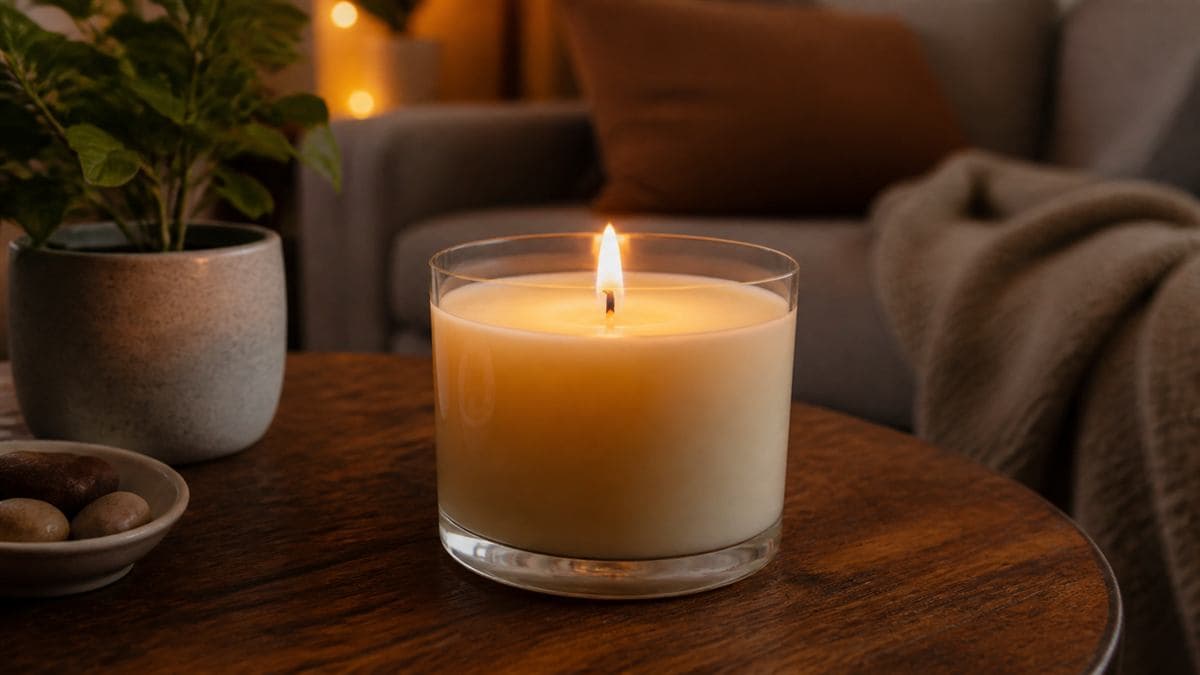
Tunneling — where a candle burns a narrow well straight down the center, leaving a ring of unmelted wax around the edge — is one of the most common candle complaints, and it's almost always fixable rather than a sign of a defective candle. The cause is nearly always the same: the candle didn't get a proper first burn, and every burn after that inherited the problem.
The real cause: an incomplete first burn
A candle has "memory" — whatever diameter the wax pool reaches on the first burn tends to become the maximum diameter for every burn after that. If a first burn is cut short before the wax pool reaches all the way to the edges of the container, the candle essentially locks in a narrow burn diameter permanently, and every future burn will tunnel within that same narrow width, getting progressively worse.
How to fix a candle that's already tunneling
The most reliable fix is a controlled burn long enough for the wax pool to finally reach the edges of the container, even if that means a much longer burn session than usual — sometimes several hours, depending on the container's diameter. Some people also carefully trim away the raised wax walls around the tunnel with a knife before this fix-burn, which helps the flame melt evenly across the full surface faster instead of fighting through built-up wax walls. This won't always fully undo severe tunneling, but it meaningfully improves the burn pattern going forward.
How to prevent it from happening at all
- On the very first burn, let the candle go until the wax pool reaches all the way to the edge of the container — this can take 2-4 hours depending on the candle's diameter, and it's worth checking on rather than blowing it out after a "normal" 30-60 minute session
- Trim the wick to about a quarter inch before every burn — an overly long wick burns hotter and less evenly, which can contribute to uneven melting patterns
- Avoid burning in a drafty spot — airflow across the flame can cause uneven melting even on an otherwise well-behaved candle
- Once a good even burn pattern is established, keep each session long enough to maintain a full melt pool rather than repeatedly blowing it out early
What if it's already too far gone
Severe tunneling — where the well is deep and the surrounding wax walls are thick — is harder to fully correct, but a candle doesn't need to be thrown away at that point. Melting the whole top layer down with a heat gun or hair dryer on low, carefully and evenly, can level the surface and give the candle a fresh, even starting point for future burns. This is a bit more hands-on than most people want to bother with, but it works for a candle you're otherwise attached to.
Is tunneling actually a defect?
Tunneling is a burn-habit issue in the vast majority of cases, not a manufacturing problem — even a well-made candle from a reputable brand will tunnel if its first burn is cut short. That said, a candle with a poorly centered or oversized wick relative to its diameter can tunnel more easily even with a proper first burn, so if the problem persists across multiple candles from the same source despite following proper burn habits, it's reasonable to consider whether the wick sizing itself is a mismatch for that container.
How container shape affects tunneling risk from the start
Some container shapes are simply more prone to tunneling than others, independent of burn habits — a tall, narrow container concentrates heat differently than a wide, shallow one, and can be more prone to tunneling even with a reasonably good first burn. This is worth knowing when choosing candles generally: a wider, shallower container tends to be more forgiving of an imperfect first burn than a tall narrow one, which has less surface area for the wax pool to spread across and less margin for error in burn timing.
A quick reference for burn times by container size
As a rough general guide, small candles (under 3 inches in diameter) often need 1-2 hours for a proper first burn to reach full melt-pool width, medium candles (3-4 inches) often need 2-3 hours, and larger candles can need 3-4 hours or more. These are rough starting estimates rather than precise rules — the safest approach for any specific candle is watching the actual wax pool rather than watching the clock, and continuing the first burn until the pool visibly reaches the container's edge, however long that takes for that specific candle.
A note on scented versus unscented candles and tunneling
Heavily scented candles, particularly ones with a high fragrance oil load, can sometimes be more prone to uneven burning and tunneling than lighter-scented or unscented candles, since fragrance oil content affects wax consistency and melting behavior. This isn't a reason to avoid scented candles, but it's worth being especially diligent about a proper first burn with heavily fragranced candles specifically, since they may be somewhat less forgiving of a rushed or incomplete first session than a simpler unscented candle would be.
If you're ready to buy, Salus heat is worth checking — they currently have 5% off live right now.
If you're ready to buy, Salus heat is worth checking — they currently have 5% off live right now.
If you're ready to buy, Salus heat is worth checking — they currently have 5% off live right now.
If you're ready to buy, Salus heat is worth checking — they currently have 5% off live right now.
If you're ready to buy, Salus heat is worth checking — they currently have 5% off live right now.
If you're ready to buy, Salus heat is worth checking — they currently have 5% off live right now.
If you're ready to buy, Salus heat is worth checking — they currently have 5% off live right now.
If you're ready to buy, Salus heat is worth checking — they currently have 5% off live right now.
If you're ready to buy, Salus heat is worth checking — they currently have 5% off live right now.
If you're ready to buy, Salus heat is worth checking — they currently have 5% off live right now.
If you're ready to buy, Salus heat is worth checking — they currently have 5% off live right now.
If you're ready to buy, Salus heat is worth checking — they currently have 5% off live right now.
If you're ready to buy, Salus heat is worth checking — they currently have 5% off live right now.
If you're ready to buy, Salus heat is worth checking — they currently have 5% off live right now.
If you're ready to buy, Salus heat is worth checking — they currently have 5% off live right now.
If you're ready to buy, Salus heat is worth checking — they currently have 5% off live right now.
Get 5% OFF at Salus heat
This article contains an affiliate link. If you buy through it, 5listed may earn a commission at no extra cost to you — see our review policy.
Conclusion
Tunneling almost always traces back to one thing: a first burn that didn't run long enough for the wax pool to reach the container's edges. Give a new candle a proper long first burn, trim the wick before every session after that, and burn away from drafts — three simple habits that prevent the single most common candle complaint entirely.
Keep reading
Related Articles
Published: August 11, 2026
Niimbot Portable Label Printer Review: Is It Actually Worth Using for Everyday Organizing?
A practical look at Niimbot's pocket-sized Bluetooth label printers — what they're genuinely good at, where they fall short, and who should skip them.

Published: August 11, 2026
Xbows Mechanical Keyboards Long-Term: What Actually Holds Up After Regular Daily Use
Ergonomic mechanical keyboards get a lot of hype at unboxing. Here's what tends to matter — and what tends to wear — once one becomes your daily driver.
Published: August 11, 2026
Juice Technology AG EV Chargers Compared: Which Model Actually Fits Your Setup
Juice Technology AG makes several home and portable EV charging options. Here's how the general categories differ so you pick the right one, not the flashiest one.